
Educational Sessions

LET’S LEARN
The annual NCYGS is entering its 34th year as the national model for youth gardening education. Leveraging a proven train-the-trainer model, the Symposium has cultivated thousands of educators across the country who return to their communities inspired, invigorated, and motivated to educate a new generation about the importance of gardening.
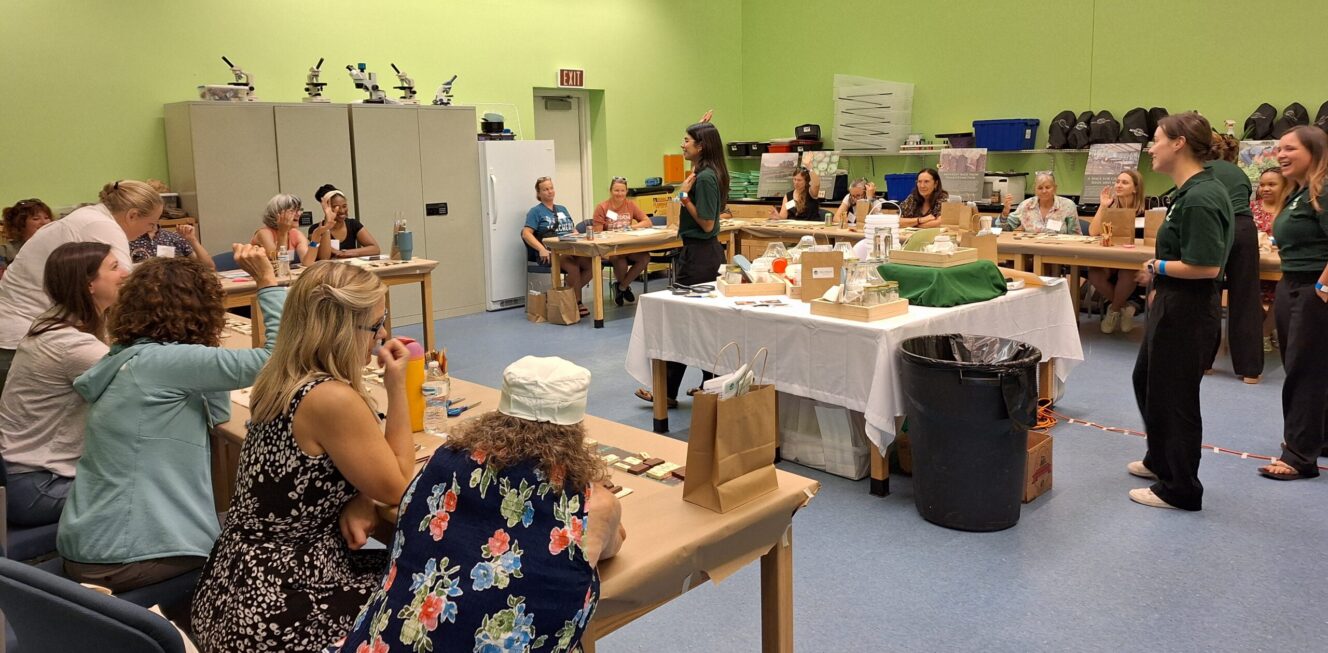
Our 2026 sessions are classified in six tracks: In the Classroom, In the School Garden, In the Public Garden, In the Community Garden, Youth Gardening in Research, and Youth Gardening for the Future. While each session is placed in a track, many sessions are relevant to educators from a range of backgrounds; we encourage attendees to read all the options in a session block when deciding which session to attend. Click on each block below to learn more about the sessions in that block.
Block A: Morning Workshops
Track: In the School Garden
Sprout Lab: Design Thinking in the Garden
Zari St Jean, Greenhouse & Campus Farm Manager, Rollins College – Winter Park, FL
In this immersive experience, participants will learn the fundamentals of design thinking and how it applies to real-world challenges in environmental sustainability. They will engage in collaborative activities, observe and analyze spaces, and apply their learning to design and build pollinator-friendly planters. By the end, participants will present their prototypes and explain their process, from inspiration to execution. Your creation will help beautify a landscape and sustain the ecological integrity of pollinators!
Track: In the Public Garden
Tropical Treasures
Julie O’Bryan, Outreach Coordinator, Memphis Botanic Garden – Memphis, TN
Patti Berry, Informal Education Coordinator at The Memphis Botanic Garden – Memphis, TN
Participants will “travel to the jungle” with our safari guides to learn about the amazing tropical rainforests of the world and how to use your tropical plant collections to share the wonders of this unique environment with your students! Check out our “Tropical Treasure” boxes filled with products like shoes, spices and medicine all sourced from the richest and most diverse biome on our planet. Discover how animals interact with rainforest plants through symbiosis and other adaptations with an interactive game!
Track: In the Community Garden
Monarchs on the Move
Mary Beth Cary, Chair, Monarchs Across Georgia – Sylvester, GA
Susan Meyers, Volunteer Administrator, Symbolic Monarch Migration Project, Monarchs Across Georgia Committee, Environmental Education Alliance – Lilburn, GA
Monarchs are in the news and the focus of a plethora of scientific research.
As gardeners, discover the host and nectar plants you can provide to complete their metamorphosis and migration.
As community (participatory) scientists, explore the ways you can contribute data about their survival, food preferences, migration routes, and more.
As global citizens, connect with youth across North America through the Symbolic Monarch Migration (SMM) project. The SMM mimics the monarch migration to Mexico in the autumn and their return north in the spring. Youth in the USA and Canada send life-sized paper butterflies south in the fall and receive different paper butterflies from participating groups in the spring, with a letter from a student in Mexico. Youth in the USA and Canada also create Ambassador Folders as gifts for Mexican students. The Folders are a message of friendship, decorated with greetings in Spanish that will be received by a student within the Monarch Butterfly Biosphere Reserve, along with an environmental lesson by Monarchs Across Georgia’s environmental educator in Mexico.
Track: Youth Gardening for the Future
“Cover to Cover” on the farm and in the garden
Ginger Anderson, Director of Education and Outreach, Oak Spring Garden Foundation – Upperville, VA
Tricia Betterly, Teaching Specialist, Oak Spring Garden Foundation – Upperville, VA
Jimena Espinoza, Teaching Specialist, Oak Spring Garden Foundation – Upperville, VA
In the Biocultural Garden at Oak Spring Garden Foundation, the Local Education and Outreach Team engages youth in hands-on learning by practicing sustainable farming and gardening to maintain the future health of our valuable resources. The “Cover to Cover” farm and garden simulation uses soil bins and props to model sustainable farming/gardening techniques. Props include using broad forks and other tools to simulate minimal tillage, the use of black silage tarps, and cover crops to demonstrate how to reduce erosion, improve soil health, enhance water availability and infiltration, and improve weed and pest control. Planting a variety of crops to increase biodiversity, attract pollinators, and many more modeled techniques. This project would allow participants to get their hands in the soil and design their own farm/garden. The bins lend themselves to self-guided, playful learning and use an action list and an art component to guide youth through the necessary steps to create a sustainable farm/garden and engage creativity.
Block B: Afternoon Workshops
Track: In the Classroom
Teaching Math in the Garden
Noel Cibulka, Educational Content and Outreach Specialist, KidsGardening – Thetford Ctr, VT
In this session, Noel Cibulka of KidsGardening will share the magic of teaching math outdoors by demonstrating teaching tools and techniques from KidsGardening’s new e-course, Math in the Garden, developed in partnership with Katie Baker, Ed.D. of Elon University. The session will also engage participants in sample hands-on math activities from KidsGardening’s bestselling book Math in the Garden, written by UC Botanical Garden Educators. This session is designed for both formal and informal educators who want to learn to bridge math and garden/outdoor education. Activities will focus on elementary math concepts but are adaptable for younger and older children.
Track: In the School Garden
Place-Based Literacy: Making Meaning in the Garden
Scott Morrison, Elon University – Elon, NC
Anna Keller, undergraduate student, Elon University – Elon, NC
Gardens are literary landscapes. Science is often the go-to topic in school gardens, but in this interactive workshop, we will show how reading and writing skills can be developed in gardens – not just by themselves, but in conjunction with other subjects. School gardens provide opportunities for literary exploration in addition to nature’s academic, social-emotional, physical, and environmental benefits. Literacy in the garden is more than outdoor learning; it is place-based meaning making. Drawing on Rachel Tidd’s Wild Learning, Valerie Bang-Jensen’s Literacy Moves Outdoors, and our experiences working with students on reading and writing skills at two elementary school garden programs, we’ll explore what place-based literacy for elementary and middle grades looks like in school gardens. Participants will engage in several standards-based literacy activities. Applying their own experience and knowledge, participants will then develop a garden-based literacy activity that they can bring back to their respective contexts. We encourage participants to reflect on their experience with exploring literacy in the garden and consider how to integrate place-based literacy into their practice. We’ll dive into questions like, “How can we make meaning in the garden?” and “What might literacy in the garden look like for upper grades?”
Track: In the Public Garden
Cardboard Binoculars, Mud Kitchens, and Garden Exploration: Engaging Young Audiences at a University Botanic Garden
Shelley Mitchell, Education Director, The Botanic Garden at OSU – Stillwater, OK
The Botanic Garden at Oklahoma State University is part of a field research station just off campus. Our garden is open to the public at no charge, and we provide quality programs for all ages for free or at low-cost to the public. In our session we will share low-cost, engaging learning activities that are popular with our day camps, discuss how we engage youth beyond the children’s areas, and show how we keep youth and families engaged even after they leave the gardens. Come experience things we do at camps, special workshops, and in inter-generational sessions. Leave with copies of successful garden activities you can use at your own garden.
Track: In the Community Garden
Design a Food Forest Garden
Cierra Arterberry, Permaculture Fellow and Teacher – Houston, TX
This interactive workshop introduces middle school teachers and community educators to the fundamentals of food forest gardening through simple, sensory, and highly engaging activities. Participants explore the layers of a food forest, practice kid‑friendly site observation, and co‑create a mini design using tactile materials. The session emphasizes accessible language, collaborative learning, and practical strategies for bringing ecological literacy into the classroom—even with limited space or resources. Participants leave with ready‑to‑use activities, a simple design sequence, and confidence to guide students in imagining and stewarding a small food forest system.
Track: Youth Gardening in Research
Nature Based-Counseling Approaches in School Gardens
Dr. Jeff Cranmore, Professor, Grand Canyon University – McKinney, TX
Research has connecting Nature-based counseling/gardening to positive results in learning and wellbeing to school age students. The goal of this session is to explore developing Nature-based spaces for students to work and care for, as well as provide opportunities for students to make connections to nature. These spaces may be small container gardens to larger scale gardens that can provide learning spaces for students, as well as provide food supplements to families and the community. The session will explore ways to introduce Nature-based learning into academic classes, such as mathematics, social students, and sciences.
Track: Youth Gardening for the Future
Getting Youth Excited about Plant Identification via Gamification
Mark Tancig, Horticulture Extension Agent II, UF/IFAS Extension Leon County – Tallahassee, FL
Valerie Stansly, 4-H Youth Extension Agent, IUF/IFAS Extension Leon County – Tallahassee, FL
The term “plant blindness” has been used to describe the lack of plant awareness, including the inability of most people to identify the common plants in their everyday environments. While basic botany may be somewhat overshadowed by flashier science topics, the ability to identify species in the garden, natural ecosystems, or on grocery store shelves remains a foundational natural science skill worthy of being taught to youth. However, innovative and engaging programs to teach plant identification are needed to capture the attention of participants, especially youth. As part of UF/IFAS Extension Leon County 4-H programming, faculty created a fun and engaging Plant ID Special Interest (SPIN) Club to engage youth ages 8-18 in developing their plant identification skills. The Plant ID SPIN Club prepared participating youth for a competition-based plant identification demonstration. Session participants will learn about this four-week series in which youth are introduced to plant biology and plant taxonomic groups through brief multimedia presentations. The most engaging components include the pre- and post-plant ID quizzes, guided plant walks, eating the vegetable, fruit, and nut samples, and a lighthearted learning environment that embraces curiosity and playfulness.
Block C: Afternoon Lectures
Track: In the School Garden
Power in Partnerships: How America’s Second Largest School District and Local Community Organizations Collaborate on Compost
Ann Dang, Partnerships Manager, Garden School Foundation – Pasadena, CA
John Garside, Director Policy & Development, CropSwapLA – Los Angeles, CA
Florence Simpson, Deputy Director of Food Services, LAUSD – Los Angeles, CA
Learn how Los Angeles Unified School District (LAUSD) and local nonprofit organizations joined forces to design and implement a successful food waste prevention program, recently awarded a federal composting grant. This session will explore practical strategies for fostering cross-sector collaboration between public school systems and community-based organizations. Presenters will share real-world insights into navigating institutional systems, aligning priorities, and leveraging local strengths to reduce food waste at both the district and site level. We believe the future of youth gardening lies in creative strategies that address climate change, and cafeteria composting serves as a daily, tangible touchpoint for climate action and garden-based science learning. To strengthen school gardens, we embrace an all-hands-on-deck approach, which this program demonstrates through its partnership with LAUSD and local nonprofits such as Garden School Foundation and CropSwapLA. The 24th Street Elementary School garden celebrated its 20th anniversary last year and spans nearly an acre. It features more than 30 raised beds, production rows, a fruit tree orchard with 20+ varieties, a compost corner, native gardens, and many other educational nooks designed to support hands-on learning.
Track: In the Public Garden (A)
Expanding Outdoor Education to all Grades
Jessie Wingar, Children’s Garden Educator, Florida Botanical Gardens Foundation – Largo, FL
The Florida Botanical Gardens Foundation (FBGF) offers field trips to all ages; however, until this year, mostly elementary schools were scheduling. We saw a gap in outdoor education for middle and high schoolers. Often these higher grades have fewer field trips and opportunities to be outside. In seeing this gap, we applied for a grant through the Jae S Lim Foundation to create and implement field trips designed for middle and high schoolers. The grant included funds for four interns, programming costs, materials, and partial coverage of the educator salary. Through our interns, we developed curricula for grades 6-12 based on Florida State Science standards and worked to get the word out to schools in Pinellas County. Grades have the choice of multiple activities throughout the garden using our educational carts. We are welcoming several middle and high school groups this spring and hope to welcome more in the fall. As we look to the future, we’re excited for a program that includes all school ages to continue our goal of connecting all kids to nature. In this session, grant submission, curriculum building, reaching upper grades, and evaluation will be discussed.
Track: In the Public Garden (B)
Learning as We Grow: Adapting Youth Programs in Non-Permanent Learning Spaces
Michelle Dupar, Youth Educator and Admin Coordinator, Bellevue Botanical Garden Society – Bellevue, WA
Kate Sorensen, Youth and Children’s Programs Manager, Bellevue Botanical Garden Society –Bellevue, WA
Linda Mank, Youth Educator, Bellevue Botanical Garden Society – Bellevue, WA
The Bellevue Botanical Garden Society’s Youth and Children’s Program offers a preschool workshop series serving families across three seasons. The program includes six four-week series each year, with 24 unique topics that emphasize child-led nature play, exploration, and imagination. Learning alongside a caregiver in an informal garden setting allows young learners to build confidence, curiosity, and readiness for future formal learning. In response to growing community interest in nature-based and problem-based learning, one of our educators launched Kids in the Garden ten years ago. The program has continued to evolve through educator collaboration and family feedback, and a seventh series will be added to the 2026 program calendar. This session will highlight lessons learned from developing and sustaining a preschool program without a permanent classroom. We will explore common challenges, including space limitations and program flexibility, and discuss how reframing constraints can create opportunities for growth and innovation. Participants will be invited to share challenges from their own youth programs and engage in collaborative brainstorming to develop practical, adaptable solutions.
Track: In the Community Garden
Playscapes in Garden Areas
Crystal Gaudio – Landscape Architect, Rubus Landscape Architecture – Guilford, CT
This session will address the design and implementation process of four nature-based landscape areas: Zucker Exploration Area in Prospect Park, Brooklyn, NY; Forest Park Playscape in St. Louis, MO; Abraham Baldwin Middle School Outdoor Classroom in Guilford, CT; and the Mother Luna Toddler Play Space in Guilford, CT. These projects exhibit small to large installations with various goals, opportunities, and challenges. They are installed in residential gardens, public schools, and public parks. The budget ranges widely, but the goals are similar. This type of landscape element compliments youth gardens by providing structure, furniture, and joy to outdoor destinations children enjoy.
Track: Youth Gardening in Research
Sowing the Seeds: Cultivating Teachers to Grow Vegetables and Vocabulary
Jennifer Stratton, Program Director of Early Childhood and Elementary Education, Bay Path University – Longmeadow, MA
Get ready to dig into a story where vegetables meet vocabulary! This session highlights how undergraduate pre-service teachers designed evidence-based literacy experiences that connect farmers’ markets and locally grown produce to support young children’s vocabulary development and background knowledge. Participants will examine inclusive, culturally relevant strategies that link preschoolers with fresh, local foods—building language skills, sparking curiosity, and nurturing joyful, resilient learners rooted in their communities. The session will also explore how to authentically integrate youth gardening education into teacher preparation programs to scale and sustain effective school garden teaching and learning.
Track: Youth Gardening for the Future
Beyond Academic Boundaries: An Integrative Curriculum for Eco-Cultural Stewardship & Career Exploration
Sara Weaner Cooper, Owner & Principal, New Directions in the American Landscape – Blue Bell, PA
Transdisciplinary and “systems thinking” approaches are gaining momentum in education, but students are still too often left asking, “How does this connect to real-world issues and careers?” This presentation bridges that gap by introducing an innovative, integrative school curriculum that breaks down traditional subject silos and helps students make sense of the living systems around them…and their role within them. Activities are place-based and locally adaptable, encouraging students to study native plants, habitats, and culturally relevant land practices in their own communities. Rooted in ecological stewardship and design, the curriculum weaves together ecology, biology, math, social studies, and the arts to explore how human and natural systems deeply interconnect. Drawing on 15 years of collaboration with educators, landscape designers, ethnobiologists, municipal staff members, and activists, Sara will describe a project in which high school students develop a real-world landscape design and management plan, which they present to local industry professionals. She will conclude with a model design presentation as if she were a student of this project, inviting participants to step into the role of the professional reviewers. By teaching holistically, students become empowered to understand their place in the natural world, and how their passions are pathways for meaningful agency.
Thursday, July 16
Block D: Morning Workshops
Track: In the School Garden
No Time, No Money-How to Create a Garden for Young Children in any Setting
Liz Scholl, Teacher/Master Gardener – Hillsdale, NJ
Many teachers get excited to start a garden with young students in the spring, and ultimately not succeed, often due not just to lack of experience but to a lack of time and/or money. This hands-on workshop will present a simple system that incorporates repurposed materials for growing, access to free seeds and plants, and key activities to engage young children in the magic and excitement of growing and caring for plants. We will explore growing vegetables from food scraps, easy and dependable seed starting for small hands, ways to get free plants and simple, no-prep ways to incorporate gardening and plants into all curriculum areas, using a child centered, multi-sensory approach. Participants will learn how to incorporate a gardening program for young children in a way that is easy, simple, successful, with minimal funds and prep time. Participants will leave with project products and handouts, including links to free resources and printables as well as ways to collect/repurpose/create free supplies. Whether the garden will grow on a windowsill, playground, or containers, this session will support educators of any experience level.
Track: In the Public Garden
Little Botanists, Big Discoveries: Teaching Plant Science with Joy!
Joy Burns, School Tour Coordinator, JC Raulston Arboretum – Raleigh, NC
Elizabeth Overcash, Director of Education & Public Engagement, JC Raulston Arboretum – Raleigh, NC
Cathy Mack, Volunteer, JC Raulston Arboretum – Raleigh, NC
Step into a dynamic, kid-centered approach to teaching plant science in this hands-on session inspired by a school tour program used with thousands of third graders at the JC Raulston Arboretum in Raleigh, North Carolina. Participants will explore a practical, station-based tour model designed to transform any garden space into an engaging outdoor classroom. Through immersive, try-it-yourself activities, you’ll experience exactly how staff and volunteers present age-appropriate horticulture and botany concepts to young learners. We’ll unpack how this model seamlessly connects to state science standards, ensuring that every stop in the garden supports curriculum goals while deepening real-world understanding. You’ll also discover the powerful role that trained volunteers can play in leading tours—enhancing program capacity, enriching the student experience, and creating meaningful ripple effects throughout the community. Come ready to learn, explore, and grow your toolkit for teaching horticulture and botany to third graders in a way that is joyful, standards-aligned, and sustainable!
Track: In the Community Garden
Nature Journaling as a Learning Tool: Supporting Attention, Literacy, and Critical Thinking in Children
Linda Mank, Youth Educator, Bellevue Botanical Garden Society – Bellevue, WA
Kate Sorensen, Youth and Children’s Programs Manager, Bellevue Botanical Garden Society – Bellevue, WA
Michelle Dupar, Youth Educator and Admin Coordinator, Bellevue Botanical Garden Society – Bellevue, WA
Using the Bellevue Botanical Garden Society’s nature journaling class model, participants will learn how to use nature journaling prompts to support children’s observation skills, curiosity, scientific thinking, and early literacy. Create a mini nature journal to explore recording meta data, observations, questions, and connections. Participants will understand the cognitive and environmental benefits of nature journaling, including its role in improving attention, critical thinking, and fostering a lasting connection to nature.
Track: Youth Gardening in Research
From Lunch Trash to Living Soil: Using Composting to Launch Youth Gardening
Jeannie Rodriguez, Program & Outreach Manager, PlantLanta – Atlanta, GA
As schools face shrinking budgets, limited outdoor space, and competing instructional priorities, composting is emerging as one of the most accessible and impactful entry points into youth gardening. This interactive workshop reframes food waste not as an operational challenge, but as a daily, systems-based learning opportunity that connects the cafeteria, classroom, and garden. Drawing from real world implementation in Title I elementary schools, participants will engage in a simulated, student-centered composting experience. Working in small groups, attendees will practice conducting simplified cafeteria food waste audits, including weighing food scraps, documenting data using student friendly tracking tools, and modeling student led waste sorting routines with common lunch items. Participants will then design a compost-to-garden learning loop that demonstrates how collected food scraps are transformed into compost and returned to the school garden to support soil health and plant growth. This session emphasizes age-appropriate strategies for engaging K–5 students while embedding math, science, leadership, environmental literacy, and climate awareness into everyday routines without adding extra burden to educators. Participants will leave with practical tools, adaptable frameworks, and renewed confidence to use composting as a powerful gateway to sustained youth gardening and systems thinking.
Track: Youth Gardening for the Future
Beyond the Raised Bed: A Model for Farm-based Learning, Ag-Tech, and Strategic Partnerships
Dr. Travella Free, Associate Professor 4-H Youth Development Specialist, North Carolina A&T State University Cooperative Extension Program – Greensboro, NC
Khalifa Shareef, Youth Empowering Agriculture STEM Coordinator, North Carolina A&T State University Cooperative Extension Program – Greensboro, NC
Morgan Malone, Extension Associate, Community Foods, North Carolina A&T State University Cooperative Extension Program – Greensboro, NC
The future of youth gardening demands a move beyond small plots and into authentic, high-impact learning environments. This workshop provides a practical blueprint for transforming large spaces—like university farms or community gardens—into dynamic outdoor classrooms. We will share a successful university model focused on systems-thinking, covering soil health, crop science, and pathways to horticultural careers. Participants will explore the new frontiers of garden technology, including hands-on examples of solar-powered irrigation, soil sensors for data collection, and hydroponic systems for controlled environment agriculture. Recognizing that no garden grows in isolation, we will focus on strategic collaboration. We will demonstrate how building partnerships with local organizations, businesses, and academic institutions enhances the garden experience by providing sustainable resources, diverse expertise, and expanded reach. Attendees will receive ready-to-use lesson frameworks and partnership-building strategies, leaving with the knowledge to create high-value programs that connect youth with the big picture of food, nature, and the jobs of tomorrow. This session addresses the evolving landscape of youth gardening by bridging the gap between classroom learning, high-tech tools, and community-driven resource sharing.
Block E: Early Afternoon Lectures
Track: In the School Garden
Pulling Weeds and Sprouting Eager Learners: School Garden Lessons and Ambitions
Cassandra Espinoza, Nutrition Educator, Ventura County Farm to School – Camarillo, CA
Michelle Fe Joyce, Nutrition Educator, Ventura County Farm to School – Camarillo, CA
In this session, participants will learn from models in building and maintaining dozens of school gardens in multiple districts. We will cover funding, administrator engagement, community partners, designs for youth engagement, and garden maintenance. This session supports educators of youth of all ages, from pre-k through high school.
Track: In the Public Garden (A)
Connections Through Hawaiian Ethnobotany: how ethnobotany can be a powerful tool to spark intrigue in our local environment
Shawn Garrard, Educational Specialist, Lyon Arboretum – Wahiawa, HI
For many people, plants are just green unmoving objects with seemingly little relevance to our lives. Incorporating ethnobotany, especially local ethnobotany, reframes this. Plants become sources of food, medicine, tools, instruments, toys, clothing, shelter, and so much more. They touch on deep connections to our past, the land, culture, and the basics of what make us human. Participants will learn ways to incorporate ethnobotany to reignite our connections to plants, each other, and the place we call home.
Track: In the Public Garden (B)
Exploration Without Limits: Reimagining Field Trip Design for Youth Education in Public Gardens
Briana Gonzalez, Education Coordination, San Diego Botanic Garden – Encinitas, CA
Rachel Sebastian, Education & Public Programs Manager, San Diego Botanic Garden – Encinitas, CA
The session will explore the San Diego Botanic Garden education team’s research, development, and results of the new curricula launch and K-12 field trip program pilot. The presentation will cover SDBG’s decision to shift from a traditional educator-to-student facilitated tour model and develop a new, two-pronged approach to field trip programming: An “Open Exploration” (self-guided) model paired with bespoke, grade-banded curricula that fosters personal connections to nature and meets relevant standards including Common Core, NGSS, and the United Nations 17 SDGs. Collected data will be shared from student and chaperone participant surveys measuring learning outcomes. The following five materials will be provided to session participants: Research and Roadmap (For Program and Curriculum Design); Program Pillars; Program Learning Outcomes and Objectives; Sample Curriculum Booklets; Participant Survey Results. Insights from SDBG’s pilot season will include practical strategies for program management and overcoming the unique challenges of youth education in a public garden without a designated classroom space. Session participants will leave with a deeper understanding of frameworks for experiential learning and public engagement, creating KPIs for developing impactful programs for school and youth audiences, inspiring collective action through education about the role of botanical gardens, and more!
Track: In the Community Garden
Farm to Feast: Growing, Cooking, and Connecting Youth to Local Food Systems
Jenna Jones, 4-H Educator, University of Maryland – Clinton, MD
This session presents Farm to Feast: Growing, Cooking, and Connecting Youth to Local Food Systems, a six-week 4-H program that helps urban youth understand where food comes from while encouraging them to try new fruits and vegetables. The program uses a rotating two-site model in which youth move between the University of Maryland Community Learning Garden and a campus food pantry teaching kitchen to grow, harvest, and prepare food. Participants will learn how garden-based activities such as planting, crop care, and pollinator exploration are intentionally paired with kitchen lessons focused on nutrition, food access, and basic cooking skills. Youth actively engage in tasting and preparing foods they worked with in the garden, reinforcing the connection between growing and eating. The session focuses on how the program is designed and how similar models can be replicated. Presenters will outline the program timeline, staffing needs, and key partnerships with 4-H, EFNEP AmeriCorps members, and a student-led food pantry. Family involvement is an essential component; parents and caregivers are invited to participate in activities, support tastings, and attend a final youth showcase. Attendees will leave with a clear understanding of how to adapt this garden-to-kitchen approach for their own communities.
Track: Youth Gardening in Research
Sow Smart: Planting Your Future Programs with Quality Books and Websites
Pam Hosimer, Nutrition Educator, School Garden Advisor and Master Gardener Volunteer, University of Maryland Extension – Damascus, MD
Unlock the potential of your youth gardening programs! Join a seasoned librarian and Master Gardener to cultivate a dynamic learning environment using exceptional books and websites. This session will transform the way you source and implement educational resources. Discover how to critically select current, research-based fiction and non-fiction books that seamlessly integrate with your gardening lessons, activities, and programming. Learn techniques to leverage hidden resources within books and curate reliable online content in real-time. We will explore how to extend garden-based learning into STEAM curricula, incorporate themes of diversity and inclusion, and find inspiration on vital topics like recycling, the water cycle, soil health, pollinators, climate change and growing fruits and vegetables. A key highlight is an overview of effective storytelling techniques, showing you how to read a picture book to inspire learning and curiosity. Reading can be more than reciting the words on the page aloud! Leave with a helpful resource handout and the confidence to instantly implement these ideas to inspire the next generation of green thumbs!
Track: Youth Gardening for the Future
From One-Day Events to Year-Long Impact: Rethinking Youth Gardening Models
Cameron Anderson, Director of Community Engagement, Plantlanta – Lawrenceville, GA
Youth gardening has evolved far beyond isolated garden days or single-season projects. As schools face limited time, funding constraints, and competing priorities, garden educators are being asked to do more with less while still creating meaningful, lasting impact for young people. This session explores how short-term, high-energy activations can serve as strategic spark moments that launch sustained youth gardening, composting, and STEAM learning initiatives. Drawing from real-world experience implementing schoolwide garden and sustainability programs in Title I schools, this talk introduces a practical, replicable framework for moving from one-day events to year-long and multi-year engagement. Participants will examine how gardens can be intentionally aligned with classroom curriculum, cafeteria systems, STEM certification goals, and career pathways to ensure continuity beyond a single moment. Attendees will leave with concrete strategies for designing programs that balance inspiration with infrastructure, engagement with systems, and creativity with sustainability. This session is ideal for educators seeking realistic approaches to future-ready youth gardening models that meet schools where they are while building toward long-term impact.
Block F: Mid-Afternoon Lectures
Track: In the School Garden
Using the Therapeutic Horticulture Activities Database for Youth Programs: Expand Your Reach through Learning and Wellness
Elizabeth (Leah) Diehl, Director of Therapeutic Horticulture and Associate Research & Instructional Professor, University of Florida – Gainesville, FL
What do eco seed orbs, plant teleidoscopes, plant parts rap, and pounding pansies have in common? The THAD database! Become acquainted with this free online resource and how to use its 300+ hands-on plant and gardening activities that can be tailored for educational, therapeutic, recreational, and wellness objectives. THAD can help you engage youth more fully, offer services and programming to special populations, generate revenue from workshops, collaborate with research partners, and understand the potential of therapeutic horticulture as a pathway to expanding your garden’s activities.
Track: In the Public Garden (A)
Beyond Field Trips: Designing School District Partnerships that Extend Garden Learning
Sarah Thomas, The Huntington – San Marino, CA
Jill McArthur, Farm to School Field Coordinator, Pasadena Unified School District – Pasadena, CA
Katia Ahmed, Wellness Coordinator, Pasadena Unified School District – Pasadena, CA
How can botanical gardens work with school districts in ways that support teachers and students? In this session, presenters share lessons learned from The Huntington’s partnership with Pasadena Unified School District to create a Plant Needs program for elementary students that connects garden experiences with classroom learning. Rather than focusing on one-time field trips, this session highlights how ongoing collaboration helped shape program goals, scheduling, and resources that teachers can easily use. Attendees will see examples of short instructional videos and classroom-ready materials designed to help students understand plant science concepts before and after garden visits. This session is designed for youth garden educators and will be helpful for elementary teachers. Participants will leave with practical ideas, a clear partnership model, and adaptable tools they can use to build stronger relationships with school districts and extend garden learning beyond the visit.
Track: In the Public Garden (B)
Refreshing a Legacy Youth Program Through Reflection, Collaboration, and External Partnership
Kate Sorensen, Bellevue Botanical Garden Society – Bellevue, WA
Linda Mank, Youth Educator, Bellevue Botanical Garden Society – Bellevue, WA
Michelle Dupar, Youth Educator and Admin Coordinator, Bellevue Botanical Garden Society – Bellevue, WA
The Bellevue Botanical Garden Society Youth and Children’s Program provides free field trips for students in grades K–5 and has supported youth learning for over 30 years. As student needs and classroom realities evolve, the program is revised annually to remain relevant and accessible. In recent years, educators have observed an increase in students with socio-emotional challenges and English language learners. Classroom teachers also face growing constraints related to STEM requirements, transportation, budgets, and class size, alongside a widening gap in plant awareness as children spend less time outdoors. This interactive session will explore the collaborative processes we use to revise and refresh our curriculum. Participants will engage in discussion, share challenges from their own youth programs, and practice brainstorming adaptable solutions in small groups. We will also reflect on how team-based revision and collaboration with an outside consultant have influenced curriculum design and educator onboarding. Attendees will leave with practical strategies and facilitation tools they can apply in their own program settings.
Track: In the Community Garden
Growing Structures: Designing Trellises for Peas, Dramatic Play, and Physics skills in Early Childhood Gardens
Anna Christiansen, Teacher, Children’s Day School – San Francisco, CA
What happens when young children design structures that grow? The session will invite participants to explore how horticulture, design, engineering, and play can intersect in an early learning project. They will gain insight into the way a group of children in San Francisco co-constructed a trellised structure to play within, as well as to grow pea plants in fall/winter. Through images, video, documentation, a unit plan to take home, and reflection, attendees will examine how building a living structure nurtures scientific learning, aesthetic appreciation, child collaboration, socio-emotional language of teamwork, and a sense of stewardship for plants. The session highlights practical strategies for guiding safe tool use, facilitating problem-solving, materials, trial and error methods, and links the needs of climbing plants to the California Preschool Learning Foundations and neurodiversity. Participants will leave with inspiration and templates to plan to create their own “living structure” where plants and children thrive together.
Track: Youth Gardening in Research
Tasting Together: Introducing Young Children to New Foods
Marielle Hampton, Extension Agent, University of Hawai‘I – Kealakekua, HI
How can teachers and garden educators help young children explore new foods? In this session, participants will discover simple strategies for implementing taste tests with young children, informed by University of Hawai‘i’s Tasting with Keiki program. As educators sharing food with children, handling choosy eaters and young palates can be a challenge. This session focuses on how to keep group tastings encouraging and inclusive, including tips to minimize negative peer influences, guidelines for selecting recipes, and options for collecting student feedback. Using a “Don’t Yuck My Yum” approach, participants will learn to encourage positive, sensory-focused language that describes what children see, smell, and taste without judgment. The session will highlight ways to connect tastings with garden-to-table learning, local foods, and family engagement with food stories and take-home resources. Participants can also share ideas for food sampling activities like comparison tastings and kid-customized recipes.
Track: Youth Gardening for the Future
Developing an Entrepreneurial Classroom Through Hydroponics
Michael Craig, Teacher, Detroit Public Schools Community District – Detroit, MI
This session, presented by the American Horticulture Society’s 2023 Jane L Taylor Great American Gardener Award Winner, explores innovative techniques designed to accommodate students with multiple disabilities using differentiated methods and adaptive equipment to provide skills leading to employment opportunities. Winner of the prestigious 2021 Grand Prize Magna Award by the National School Board Association, this comprehensive program showcases the use of hydroponic growing to supply produce for fine dining establishments in Detroit while providing vocational horticulture skills. Also featured will be student successes despite barriers, a specialized curriculum for data collection, how to create partnerships with local community and business leaders, and utilizing grant writing for sustainability.